Why Commercial HVAC Systems Need Professional Air Balancing
When your commercial building feels muggy in one corner and drafty in another, most people blame the weather, the building—or worse, each other. But poor comfort and high utility bills often trace back to a hidden culprit: unbalanced airflow in your HVAC system.
At Matlock HVAC, we help facility managers, property owners, and business operators solve comfort, health, and efficiency issues every day. Air balancing isn't just a technical service—it's the starting point for a comfortable, productive workspace and lower operational costs.
What Is Air Balancing for Commercial HVAC? 🌬️
Think of your HVAC system as the lungs of your building. Air balancing is like making sure every room gets its fair share of fresh air—no more, no less. It’s the process of testing, adjusting, and fine-tuning the airflow through your ducts and vents to make sure every space receives just the right amount of heated or cooled air.
For a commercial system, this means measuring airflow room by room, then making precise tweaks using dampers, diffusers, and controls. The goal is simple: consistent temperatures, steady humidity, and clean air throughout the building.
Benefits for Health, Comfort, and Efficiency
Balanced air does more than feel good. It protects your people and your investment:
- Healthier Air: Proper balancing helps your filtration and air cleaning systems—like air scrubbers and humidifiers near you—perform at their best. This means fewer airborne irritants, less dust, and better indoor air quality (IAQ).
- Consistent Comfort: No more “hot spots” or freezing conference rooms. Balanced airflow means every space feels just right, regardless of where it sits in the building.
- Lower Energy Bills: An unbalanced system works harder than it should, driving up costs. Balancing helps your HVAC equipment run more efficiently, reducing wear and extending lifespan.
- Code Compliance: Many regions require air balancing for commercial spaces, especially for health care, food service, and public buildings. Refer to standards from ASHRAE and local building codes for specifics.
Professional Air Balancing Process
What actually happens during a professional air balancing service? Here’s how Matlock HVAC approaches it:
- Assessment: We start with a walkthrough and talk through comfort issues you’ve noticed.
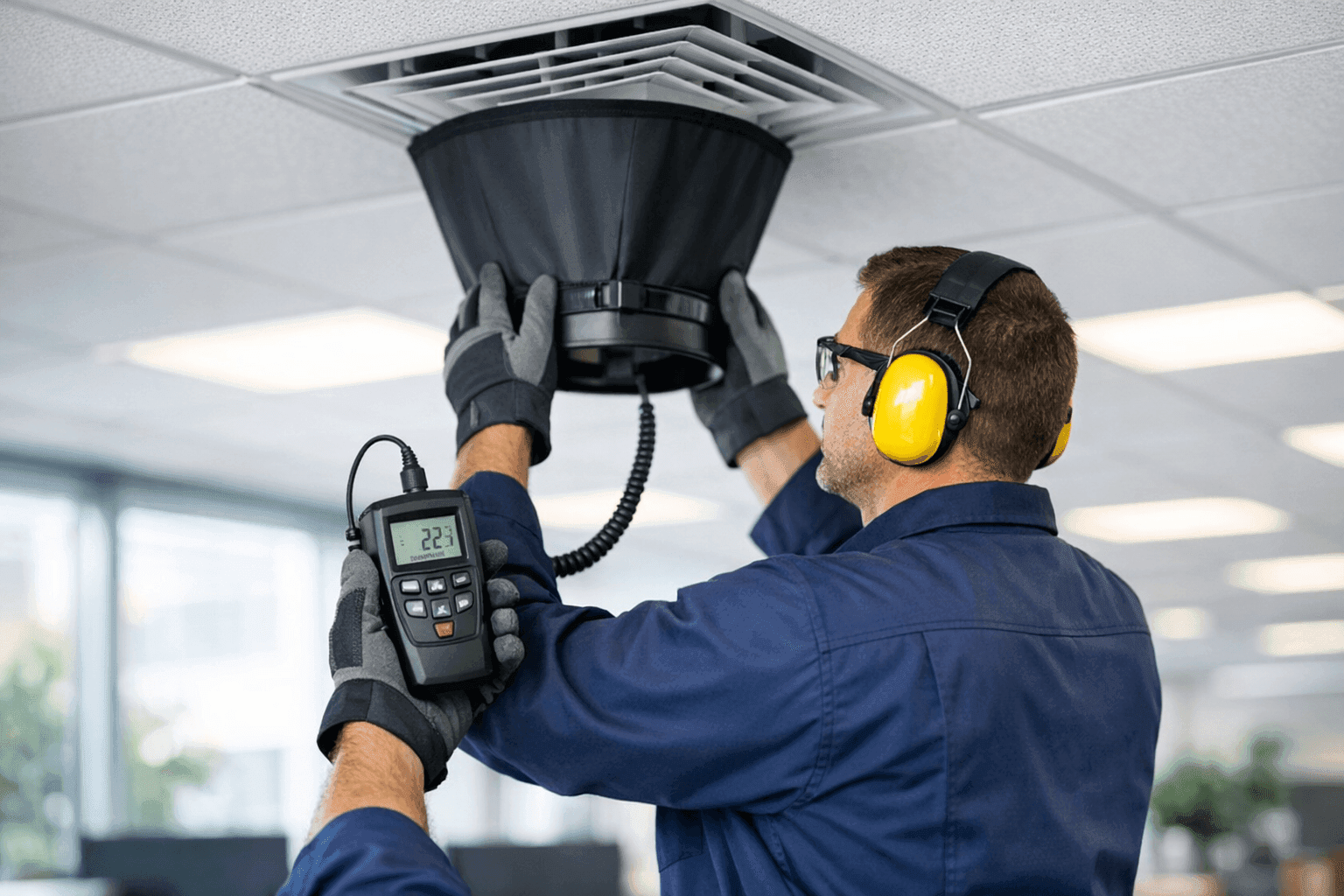
- Measurement: Using specialized equipment—like anemometers and manometers—we record airflow at every supply and return vent.
- Analysis: We compare actual airflow to design specifications (from blueprints or code).
- Adjustments: Dampers, diffusers, and controls are set for optimal performance. Sometimes, small changes in ductwork or duct-cleaning are needed to remove blockages or buildup.
- Verification: We make sure every space meets the target airflow, temperature, and humidity.
- Documentation: A detailed report shows the before-and-after results. This is valuable for future maintenance and audits.
Why DIY Balancing Won't Work
Balancing air isn’t like adjusting a thermostat. It requires specialized tools, math, and a knowledge of pressure, flow, and system design. Attempting to “eyeball” airflow can make things worse—or even damage your system.
For commercial facilities, improper balancing risks comfort complaints, equipment strain, and compliance failures. That’s why calling in a team trained in commercial air-balancing is always the smart move.
Common Signs Your System Needs Balancing
Wondering if your building is overdue? Watch for:
- Persistent hot or cold spots, especially in interior rooms.
- Doors that slam or stick due to pressure differences.
- Excessive dust or lingering odors.
- High energy bills without clear explanation.
- Complaints from tenants or employees about comfort.
Any one of these can signal air distribution problems.
Quick Safety & Comfort Checklist
Before a full balancing service, take these steps:
- Change all HVAC filters (clogged filters block airflow).
- Make sure all supply and return vents are open and unblocked.
- Listen for unusual noises—whistling, banging, or rattling.
- Check thermostat settings and locations.
- Review your maintenance logs to spot recurring issues.
If problems persist, it’s time for a deeper look.
The Real-World Impact: Health, Productivity, and Peace of Mind
Balanced air isn’t just technical—it’s practical. Employees are less likely to call in sick with improved air quality. Customers linger longer in comfortable spaces. Equipment like computers and printers lasts longer in stable conditions.
In schools, hospitals, and food service, balanced HVAC can be a matter of safety and compliance. The CDC, OSHA, and ASHRAE all emphasize the importance of proper ventilation and air distribution for health and safety.
The Role of Duct Cleaning and Maintenance
Air balancing only works if your ducts are clear and your equipment is maintained. Dust, mold, and debris inside ducts throw everything off. Regular hvac-maintenance is the foundation for any successful balancing effort.
A neglected system is like a blocked artery—no matter how well you try to balance it, the problem remains until you clear the path.
When to Rebalance Your System 🛠️
Air balancing isn’t a one-and-done job. Buildings change. People rearrange spaces, remodel, or add new equipment—all of which can throw off airflow.
Key times to schedule a rebalance:
- After renovations, buildouts, or major repairs.
- When adding or changing large appliances.
- At the start of each season, especially before big swings in temperature.
- If you notice any of the warning signs above.
- When required by building codes or lease agreements.
How Long Does Air Balancing Take?
Most commercial balancing jobs take one to three days, depending on building size and complexity. Small offices may need just a few hours; hospitals, schools, or large retail spaces can take longer. The process is designed to minimize disruption—our team works around your schedule and business needs.
Materials and Equipment Used
You’ll see technicians with:
- Airflow meters and hoods
- Pressure gauges
- Digital thermometers and hygrometers
- Access tools for dampers and diffusers
- Reporting and documentation software
Each tool is essential for precision—guesswork isn’t good enough.
Common Mistakes When Air Balancing Goes Wrong
- Ignoring regular maintenance before balancing
- Skipping rooms or zones (every space matters)
- Over-adjusting dampers (leading to whistling or pressure issues)
- Balancing with dirty filters or ducts
- Relying on outdated blueprints or incomplete data
A professional approach avoids these pitfalls and saves you money in the long run.
Frequently Asked Questions
Does air balancing fix IAQ problems?
It helps, but it’s only one part of the solution. Combine balancing with proper filtration, humidity control, and regular IAQ testing for best results.
Will balanced air reduce my energy costs?
Yes. By ensuring your system isn’t overworking to compensate for imbalances, you’ll see savings on your utility bills.
How often should I rebalance?
Plan for a check every 3–5 years, or after any major building change.
When to Call for Emergency Service
Sudden comfort drops, extreme temperature swings, or strange noises can be signs of urgent issues. Local teams can respond quickly—if you're in the area, you can check availability through our Birmingham service page for rapid response.
Seasonal Considerations: Prepare for the Extremes
Extreme cold or heat puts extra strain on your HVAC system. Balancing before peak seasons helps ensure your building stays comfortable, no matter what the forecast says. Schedule ahead, especially if you operate year-round or have high-occupancy periods.
Preparing for a Professional Air Balancing Visit
To help things go smoothly:
- Clear access to mechanical rooms, vents, and thermostats.
- Provide system documentation if available.
- Let staff know technicians will be working in different rooms.
- List any recurring comfort complaints or problem areas.
Small steps make a big difference for a thorough, efficient service.
Final Thoughts: Invest in Lasting Comfort and Efficiency
Air balancing is the invisible hero of commercial comfort. It’s an investment in your people, your building, and your bottom line. Whether you manage a large facility or a small business, balanced airflow pays off in better health, productivity, and energy savings.
Call Matlock HVAC now — or reach us anytime at 844-484-6545 .