The Real Cost of Furnace Repair: What to Expect
When your furnace sputters or quits in the dead of winter, time seems to slow down. The house feels colder by the minute. You wonder: how much is this going to cost me?
At Matlock HVAC, we understand how stressful furnace trouble can be. We’ve helped both homeowners and businesses navigate repair decisions, and we know how confusing pricing can get. Here’s a guide to help you see the whole picture—so you know what to expect, what to watch out for, and how to keep your home or business safe and warm.
Factors That Influence Furnace Repair Pricing 🛠️
No two furnace repairs are quite the same, and neither are their price tags. Imagine furnace repair like car maintenance: a quick fix for a flat tire is never the same as rebuilding the engine.
Some of the biggest factors that shape your repair bill:
- Type and Age of Furnace: Older systems or specialty models (like radiant heating or geothermal) may need harder-to-find parts or extra labor.
- Problem Severity: A clogged filter is quick to fix. Replacing a heat exchanger? That’s a bigger job.
- Emergency or After-Hours Calls: Night and weekend repairs often come with higher rates.
- Accessibility: If your unit is tucked in a crawl space or attic, expect a bit more for labor.
- Parts Availability: Some parts have longer lead times or higher costs, especially for less common brands.
The range can be wide. But knowing these variables arms you with the right questions to ask your HVAC professional.
Common Repairs and Their Costs
Let’s break down typical issues and what they might cost. Keep in mind: these are ballpark figures, and actual pricing depends on your specific furnace, its condition, and local rates.
- Thermostat Replacement: $150–$400 (including calibration)
- Ignitor or Flame Sensor: $150–$300
- Blower Motor: $400–$1,200 (parts plus labor)
- Limit Switch or Pressure Switch: $100–$300
- Heat Exchanger Replacement: $1,000–$2,500 (sometimes more, often triggers replacement discussion)
- General Diagnostic Visit: $80–$150 (applied to repair if you proceed)
Some repairs, like cleaning filters or tightening electrical connections, are less expensive—often handled during routine HVAC maintenance. Others, especially those involving safety components, can add up fast.
When Repair Is Worth It vs. Replacement
It’s a classic dilemma: Should you fix your old furnace or consider a new one? Think of it like patching up an old car versus investing in a newer model.
Repair usually makes sense when:
- The unit is under 10 years old and well-maintained.
- The fix is minor (under 30% of the cost of a new furnace).
- Parts are readily available.
Replacement may be smarter when:
- The furnace is older than 15 years.
- Repairs are frequent or costs are stacking up.
- Safety is a concern (like a cracked heat exchanger).
- Energy bills keep climbing, even after repairs.
We’ll always discuss options with you honestly. Our goal is to help you make the call that works best for your budget and comfort.
Warranty and Service Plan Considerations
Before you sign off on any repair, check if your furnace is still under manufacturer warranty. Many warranties cover expensive parts for 5–10 years, but labor is often extra. Service plans from companies like Matlock HVAC can also reduce costs for regular maintenance and certain repairs.
Ask your technician to review what’s covered and what’s not. It’s worth a few minutes—sometimes a phone call saves hundreds.
Avoiding Surprise Charges 💡
Nobody likes hidden fees. Here’s how to keep your furnace repair bill clear and manageable:
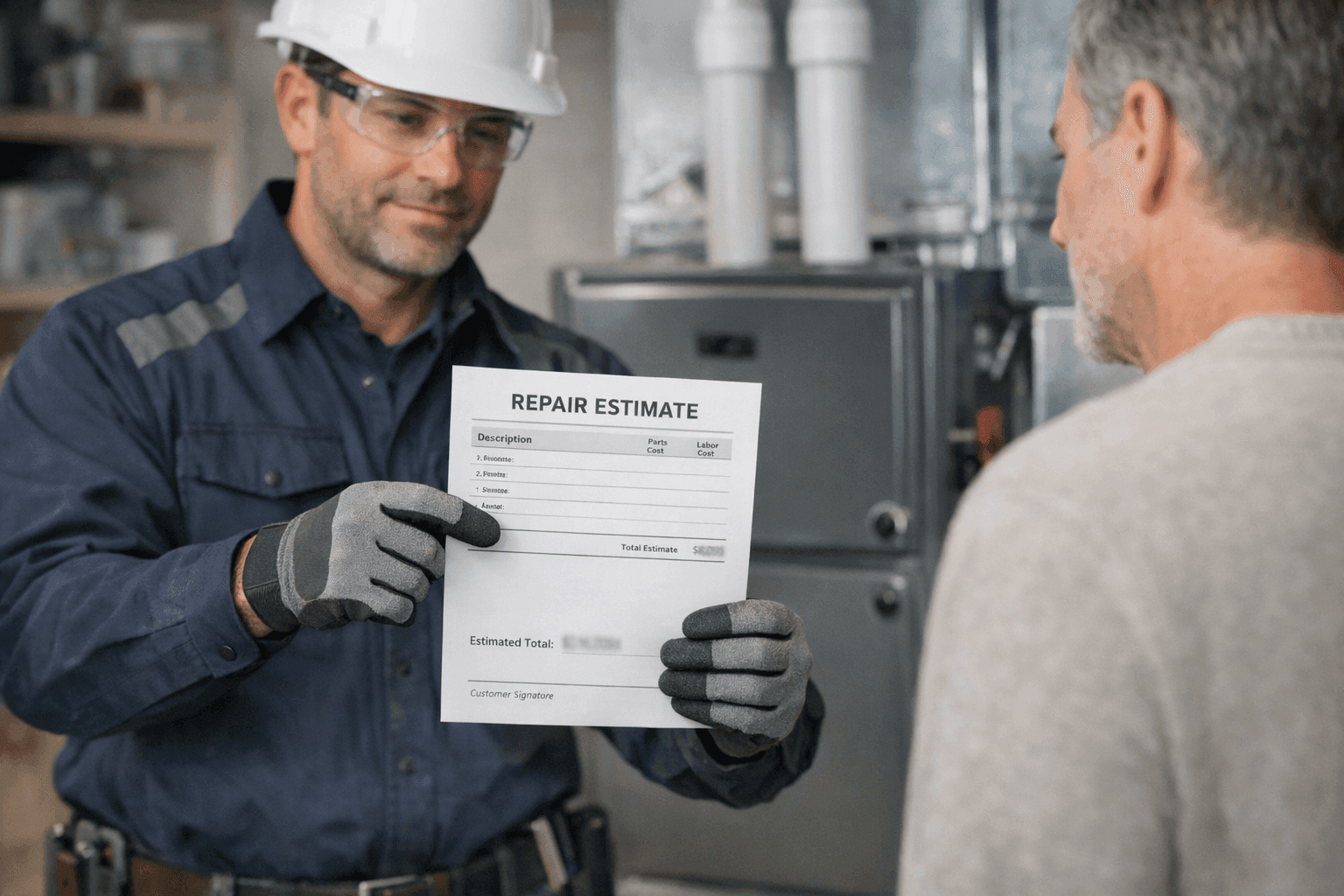
- Request a Written Estimate: Ask for a line-by-line breakdown. If something’s unclear, get it explained in plain language.
- Ask About Diagnostic Fees: Some companies waive this if you approve the repair.
- Clarify Emergency Rates: If you need a late-night fix, confirm any surcharges upfront.
- Review Labor vs. Parts: Sometimes, most of the cost is labor. Other times, it’s the part itself.
If something feels off—like a “rush” to replace your entire system without good reason—get a second opinion. The U.S. Department of Energy recommends this, especially for major repairs.
What to Expect When the Technician Arrives
A reliable HVAC technician should arrive on time, with clear identification and proper equipment. Here’s what typically happens:
- Initial Assessment: The tech will talk through your furnace’s symptoms and history.
- Safety Evaluation: Checking for carbon monoxide leaks, gas connections, and electrical hazards is standard.
- Diagnosis: Using tools and experience, the technician pinpoints the issue.
- Estimate Provided: You’ll receive a written estimate for the recommended repair.
- Repair or Replacement: The tech completes the approved work, tests the system, and walks you through the results.
Always ask questions if you’re unsure. A trustworthy pro wants you to feel comfortable with every step.
Quick Safety Checklist for Furnace Issues
Before you call for help, here’s a fast safety rundown:
- No Heat? Check the thermostat and power switches first.
- Unusual Smell (like rotten eggs)? Evacuate immediately and call your gas company. This could signal a gas leak.
- Loud Bangs or Squeals? Shut off the system and call for service.
- Yellow Burner Flame? This could mean incomplete combustion—call a professional.
Safety should always come first. Never ignore warning signs.
DIY vs. Calling a Pro
It’s tempting to roll up your sleeves, but furnaces are complex—and mistakes can be dangerous. You can:
- Replace filters regularly.
- Check thermostat batteries.
- Keep vents and registers clear.
But for electrical, gas, or mechanical issues, always call a pro. According to the National Fire Protection Association, improper repairs are a leading cause of heating-related fires.
Seasonal Considerations and Furnace Repair
Furnace trouble doesn’t have a favorite season, but winter emergencies are the most urgent. Early fall is the ideal time for a system checkup—before cold snaps hit and service calls spike.
If you’re in the Framingham area, our local support team is ready year-round to help with urgent repairs or routine visits.
Prevention: Maintenance That Lowers Repair Costs 🧰
An ounce of prevention, as the saying goes, can save you a pound of repair bills. Regular maintenance checks—like those for furnace repair—help catch small issues before they balloon into big expenses.
What’s included?
- Filter changes
- Safety system inspection
- Burner and pilot cleaning
- Airflow and duct checks
- Calibration of thermostats
Annual maintenance can also extend your system’s life and keep your indoor air quality healthy.
Red Flags: Recognizing Unusual Estimates
A few things should give you pause:
- Extremely low bids (often corners are cut, or parts are subpar)
- Vague descriptions (“miscellaneous parts” with big price tags)
- High-pressure tactics to replace the whole system without clear cause
Stick with companies that walk you through every charge. If something doesn’t add up, ask for clarification—your comfort and wallet depend on it.
Timeline and Disruption: What’s Normal?
Most furnace repairs can be wrapped up in a single visit, often within a few hours. Bigger jobs—like replacing a blower motor or heat exchanger—may take a day or two, especially if parts need ordering.
Expect some noise and brief downtime. Reliable technicians will keep disruption to a minimum and clean up afterward.
Frequently Asked Questions
How do I know if my furnace needs a repair or just a tune-up?
If your system is making new noises, heating unevenly, or cycling on and off frequently, call for an evaluation. Sometimes a tune-up fixes the issue, but new symptoms mean it’s time for a closer look.
Can I use aftermarket or generic parts to save money?
Some generic parts work, but they may not be as durable or safe. Always ask about the pros and cons.
Does my homeowner’s insurance cover furnace repairs?
Usually not, unless damage is caused by an event like a fire or flood. Check your policy or ask your agent to be sure.
Making Informed Decisions for Your Home or Business
Understanding the real cost of furnace repair means fewer surprises, safer homes, and more control over your comfort. At Matlock HVAC, we’re always here to answer questions and explain your options, whether you need a quick fix or are exploring energy-efficient upgrades.
Call Matlock HVAC now — or reach us anytime at 844-484-6545 .