The Science of Air Filtration: MERV Ratings and Beyond
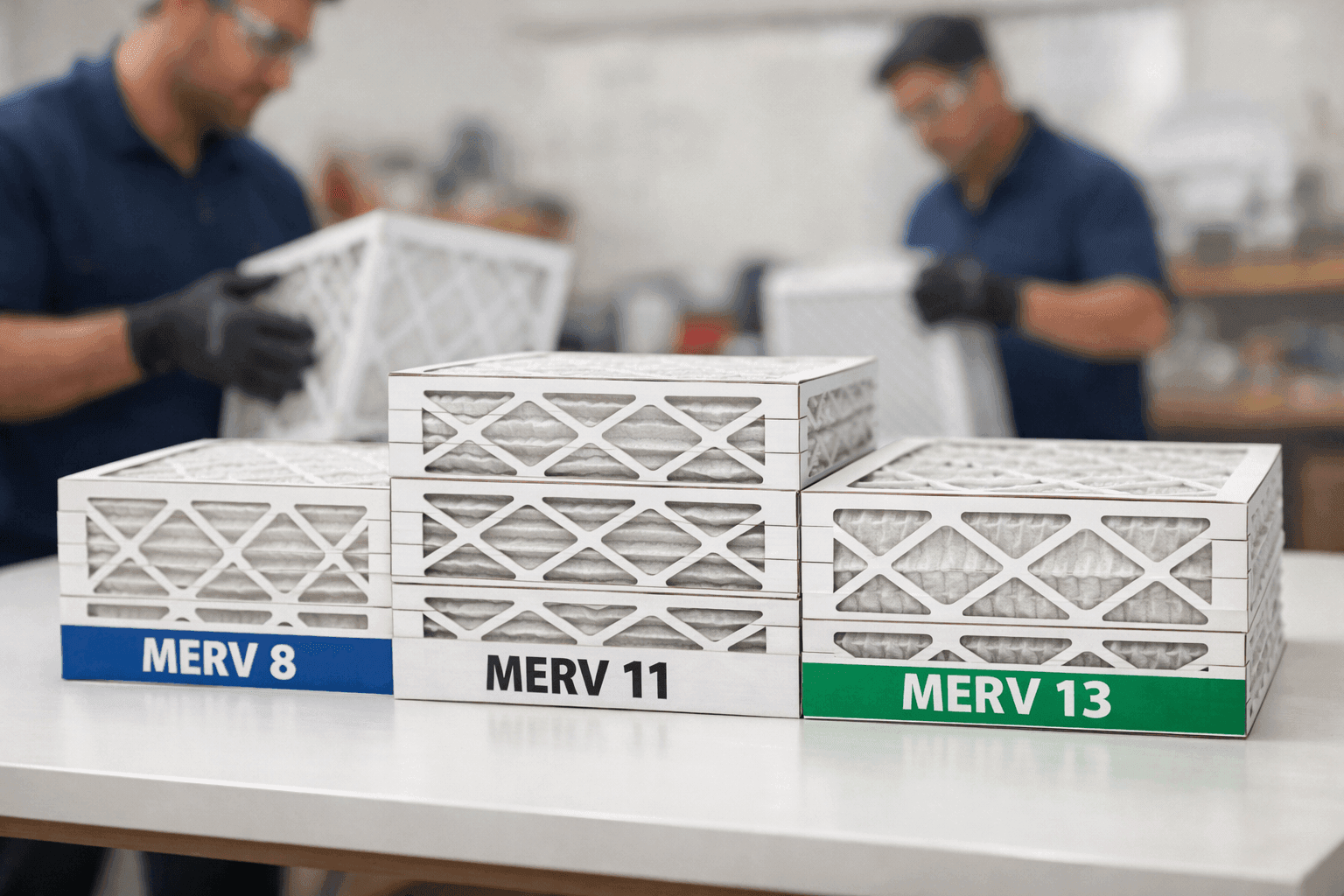
Is the air in your home or business as clean as it could be? Most of us don’t think twice about the filters tucked inside our HVAC systems—until allergies spike, dust gathers, or a musty smell lingers. The truth? The filter you choose can make or break your indoor air quality, not to mention your system’s health.
At Matlock HVAC, we know the science behind clean air doesn’t have to feel complicated. In this guide, we’ll unravel MERV ratings, filter types, and smart selection tips—so you can breathe easier and keep your system humming smoothly.
What Are MERV Ratings? 🛡️
Let’s start with the basics. MERV stands for Minimum Efficiency Reporting Value. It’s a rating scale, developed by ASHRAE (the American Society of Heating, Refrigerating and Air-Conditioning Engineers), to measure how well a filter traps tiny particles, like dust, pollen, mold spores, pet dander, or even smoke.
Imagine MERV ratings as a school grading system for filters—higher numbers mean better filtration. The scale runs from 1 to 20:
- MERV 1–4: Catches only the largest dust bunnies.
- MERV 5–8: Stops mold spores, dust mites, and household dust.
- MERV 9–12: Grabs pet dander, fine dust, and some bacteria.
- MERV 13–16: Blocks smoke, sneeze droplets, and some viruses.
- MERV 17–20: Used in hospitals. Think surgical suites and clean rooms.
But higher isn’t always better for every system—more on that soon.
Types of HVAC Filters Explained
Not all filters are created equal. Each type has strengths, weaknesses, and best-fit scenarios. Here’s how the main players stack up:
1. Fiberglass Filters
These are your entry-level filters. They look like thin, flat screens, and their main job is catching big debris to keep your HVAC from clogging.
- Pros: Cheap, widely available.
- Cons: Minimal impact on indoor air quality. Low MERV (usually 2–4).
2. Pleated Filters
Picture an accordion—more layers, more surface area to trap nasties.
- Pros: Improved filtration, often MERV 6–13. Good for homes with pets or allergies.
- Cons: Slightly higher cost. May restrict airflow if changed infrequently.
3. Electrostatic Filters
These use static electricity (like a balloon rubbed on your head) to pull in particles.
- Pros: Washable versions available. Good for allergy sufferers.
- Cons: Effectiveness drops if not cleaned regularly.
4. HEPA Filters
High-Efficiency Particulate Air (HEPA) filters are the gold standard—used in hospitals and labs.
- Pros: Removes up to 99.97% of particles ≥0.3 microns.
- Cons: Not always compatible with standard residential HVAC systems due to high airflow restriction.
5. Activated Carbon Filters
Great at fighting odors and chemicals, thanks to their sponge-like carbon surface.
- Pros: Neutralizes smoke, cooking smells, VOCs (volatile organic compounds).
- Cons: Usually paired with another filter for dust and allergens.
How to Choose the Right Filter
Walking down the filter aisle can feel like choosing a cereal—endless options, but which is healthiest?
Here’s how to pick a winner:
-
Check Your System Specs
- Your HVAC system’s manual (or the label inside the return air vent) lists compatible filter sizes and the max MERV it can handle.
- Too high a MERV rating, and your system could strain like someone trying to breathe through a straw.
-
Allergies or Health Concerns?
- If you or your family have asthma, allergies, or immune sensitivities, aim for MERV 11–13.
- For severe needs, consider air scrubbers or HEPA add-ons—ask a pro about compatibility.
-
Pets or Smoke?
- Pet owners and smokers benefit from higher MERV pleated or electrostatic filters.
- Activated carbon can help with odors.
-
Budget and Maintenance Habits
- Lower-cost filters need more frequent changing.
- Pleated and electrostatic filters last longer, but check them monthly, especially during heavy use.
-
Consider Indoor Air Quality Testing
- Not sure what’s in your air? Schedule IAQ testing to pinpoint pollutants and find the right filter solution.
Impact on Air Quality and System Performance
Your filter is the gatekeeper between the outside world and your lungs. But its job is a balancing act.
- A filter that’s too dense (high MERV) can choke airflow. Your system works harder, energy bills climb, and comfort drops.
- A filter that’s too loose (low MERV) lets dust and allergens slip by. Your air stays dirty and your system’s insides get grimy.
ASHRAE and the EPA both agree: find the highest-rated filter your system can handle without restricting airflow. Think of it as finding the right pair of running shoes—not too tight, not too loose.
Signs You Need a New Filter
Sometimes, your house whispers (or shouts) for a filter swap. Watch for:
- Increased dust on surfaces
- Allergy symptoms flaring up
- HVAC system working longer or struggling to keep the temperature steady
- A musty or stale odor from vents
- Visible dirt or discoloration on the filter itself
DIY Filter Changes: Safety and Tips
Changing a filter is often straightforward, but safety first. Here’s a checklist:
- Turn off your system. Don’t risk a blast of dust in your face.
- Check the size. Filters must fit snugly—no gaps.
- Insert with airflow arrow pointing toward the fan.
- Dispose of old filters safely. Bag up dusty filters to avoid spreading particles.
If you’re up for it, pleated and standard filters are usually DIY-friendly. HEPA or specialty filters, though, often need a professional touch.
When to Call an Expert
If you notice persistent allergy flare-ups, airflow problems, or your system starts making new noises after a filter change, it’s time to call in the pros. Sometimes, an undersized or oversized filter can cause bigger issues, like frozen coils or overheating.
For those in the region, local support is available—see our Casper area services for more details on professional air quality solutions.
How Frequently Should You Change Filters?
There’s no one-size-fits-all answer, but a good rule of thumb:
- Fiberglass: Every 30 days
- Pleated: Every 60–90 days
- Electrostatic (washable): Clean monthly
- HEPA or specialty: Follow manufacturer’s guidance
If you have pets, allergies, or run your system constantly, check and change more often. For commercial spaces, stick to a tighter schedule—poor filtration can affect worker health and product quality.
Common Mistakes When Choosing Filters
We see it all the time:
- Buying the wrong size. (Always double-check!)
- Choosing the highest MERV without checking compatibility.
- Forgetting to replace or clean filters regularly.
- Ignoring underlying issues like duct leaks or humidity.
Avoid these, and your system—and lungs—will thank you.
How Filtration Fits Into Whole-Home Air Quality
A filter is just one piece of the indoor air puzzle. For truly healthy air, consider:
- Humidifiers and dehumidifiers: Balance moisture, prevent mold.
- Air scrubbers: Capture ultra-fine particles.
- UV lights: Neutralize bacteria and viruses.
- Regular duct cleaning: Remove accumulated dust and allergens.
Explore our comprehensive indoor air quality solutions for a layered approach.
Frequently Asked Questions
What is the best MERV rating for most homes?
Most residential systems work best with MERV 8–13. Much higher, and you risk restricting airflow. Always check your system specs.
Can I use a HEPA filter in my current HVAC system?
Usually not—HEPA filters require much more powerful fans. Ask your HVAC professional if you’re considering this upgrade.
How can I tell if my filter needs changing?
Hold it up to the light. If you can barely see through it—or it’s gray and dusty—it’s time for a swap.
Do higher-rated filters cost more to run?
Sometimes. If they restrict airflow, your system may use more energy. But the health benefits can be worth it, especially for allergy sufferers.
Prevention and Maintenance Tips
- Set a calendar reminder to check your filter monthly.
- Stock up on replacement filters so you’re never caught off guard.
- If you notice persistent air quality issues, schedule an IAQ test or maintenance visit.
- Pair your filter upgrades with routine filter service and maintenance for optimal performance.
Seasonal Considerations
Spring pollen, summer dust, fall leaves, winter closed windows—every season brings its own filtration challenges. Adjust your filter change schedule to match heavy-use periods. For example, during wildfire season or allergy peaks, swap filters more frequently.
Final Thoughts: Breathing Easy Year-Round
Choosing the right HVAC filter isn’t just about dust—it’s about health, comfort, and protecting your investment. With a little know-how and regular maintenance, you can keep indoor air fresh and your system running at its best. Whether you need help with basic filter swaps or tackling complex indoor air quality issues, Matlock HVAC is here to help—residential and commercial.
Call Matlock HVAC now — or reach us anytime at 844-484-6545 .