How to Select the Best HVAC Filter for Allergies
Does springtime leave you sneezing indoors as much as outside? Or maybe you’re tired of dust piling up, and your nose knows every time the pollen count spikes. For many, allergies don’t take a break when you shut your front door. At Matlock HVAC, we know that the right air filter is more than just a box you swap out once in a while—it’s your home or business’s first line of defense against airborne irritants.
When it comes to relief, not all filters are created equal. Let’s walk through how HVAC filters really work for allergies, which types to look for, and what makes the difference between breathing easy and battling the sniffles.
How Filters Help Allergies 🤧
Think of your HVAC filter as a goalie—its job is to block unwanted intruders from entering your living space. Dust, pollen, pet dander, and even some bacteria float through the air, all invisible, all ready to irritate sensitive noses and lungs. The better your filter, the more of these tiny particles it can trap.
According to the Environmental Protection Agency (EPA), high-efficiency HVAC filters are proven to capture more airborne particles, which can make a real difference for allergy sufferers. Still, filter quality and fit matter. A cheap or poorly-fitted filter is like a leaky umbrella in a rainstorm—it might help a bit, but you’ll still get wet.
Types of HVAC Filters
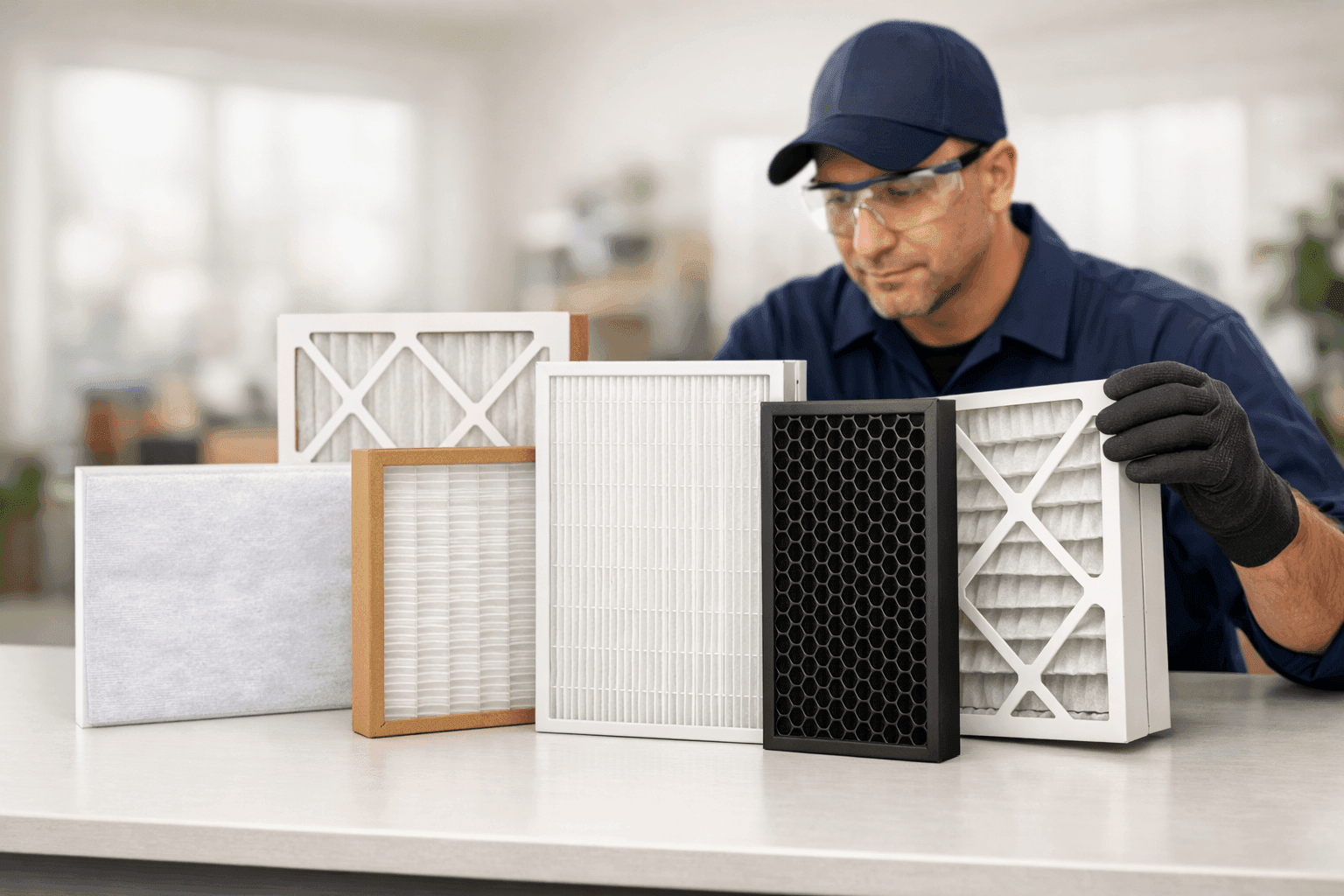
When you walk down the hardware aisle, filters might look the same at first glance. But under the surface, they’re very different in how they handle allergens.
- Fiberglass filters: The most basic (and cheapest). They catch large dust, but most tiny allergens slip right through.
- Pleated filters: Made from folded fabric or paper, these increase surface area and catch smaller particles like pollen and mold spores.
- Electrostatic filters: These use a static charge to attract particles, giving them a boost in trapping dust and pet dander.
- HEPA filters: The gold standard for allergy control, they capture at least 99.97% of particles down to 0.3 microns. Not all HVAC systems can handle them, though—ask a pro before upgrading.
- Activated carbon filters: Great for odors and some chemicals, but not a substitute for particle filtration.
What Is MERV? The Scorecard of Filtration
Ever see “MERV” on a filter box and wonder what it means? MERV stands for Minimum Efficiency Reporting Value. It’s a scale from 1 to 20 that tells you how well a filter captures particles of different sizes.
- MERV 1–4: Basic dust blocking. Not much help for allergies.
- MERV 5–8: Good for pollen and dust mites. A solid choice for most homes.
- MERV 9–12: Captures mold spores, pet dander, and fine dust. Better for allergy-prone households.
- MERV 13–16: Traps bacteria, smoke, and even some viruses. Often used in hospitals or commercial spaces.
But here’s the catch: higher MERV isn’t always better for your system. Filters with high MERV ratings can restrict airflow if your HVAC wasn’t designed for them, making your unit work harder and possibly shortening its life. The American Society of Heating, Refrigerating and Air-Conditioning Engineers (ASHRAE) recommends balancing filtration with system compatibility.
Choosing for Allergy Relief
So, which filter is right for you? Let’s break it down:
- If allergies are mild: Start with a pleated filter rated MERV 8–11. It’s an upgrade over fiberglass and fits most residential systems.
- If you have pets or moderate allergies: Look for MERV 11–13. These catch finer pet dander and mold spores.
- Severe allergies or health concerns: Consider MERV 13 or above, or even a HEPA filter if your equipment supports it. Remember, not all systems can run high-MERV or HEPA filters without modification.
Check your HVAC’s manual before jumping to a higher MERV. Not sure? A Matlock HVAC filtration specialist can help you find the balance between clean air and system health.
The Hidden Impact of Filter Quality
It’s tempting to grab the cheapest filter and call it good. But that’s like trying to stop a tidal wave with a chain-link fence. Lower quality filters miss the particles that matter most for allergies.
A dense, well-made filter holds onto those invisible nuisances—pollen, mold, and pet hair—creating a real barrier between you and the stuff that makes you sneeze. Plus, higher-quality filters mean less dust on surfaces and inside your ducts.
Signs Your Filter Isn’t Doing Its Job
How do you know if your filter is falling short? Here are the telltale signs:
- You’re changing filters more than usual, and they’re always gray or clogged.
- Allergy symptoms flare up indoors, especially when the HVAC runs.
- Dust builds up quickly on furniture and vents.
- There’s a lingering musty or stale smell.
If you spot these issues, it may be time to reevaluate your filter type or upgrade altogether.
When to Upgrade to HEPA or Specialty Filters
HEPA filters are the heavy lifters of air quality. But not every system can handle their dense structure. If you have severe asthma, allergies, or immune sensitivities, upgrading to a HEPA or medical-grade filter can be life-changing—just make sure your unit can manage the extra resistance.
Specialty filters, like activated carbon or UV-enhanced filters, help control odors and kill bacteria. These are best for homes with unique needs: smoking, pets, or high moisture.
A professional assessment can determine if your system needs tweaks or upgrades to handle these filters safely.
How Often to Change Your HVAC Filter
Even the best filter is only as good as its upkeep. For most homes, check your filter monthly and change at least every 2–3 months. If you have pets, allergies, or live in a dusty area, monthly changes are smart.
Commercial spaces or high-traffic homes may need even more frequent swaps. If your filter looks dirty before its scheduled change, don’t wait—replace it.
DIY vs. Professional Help
Swapping a filter is a quick job. But matching the right filter to your HVAC can get tricky, especially with high-MERV or specialty filters. If you’re uncertain, or if you notice airflow problems after upgrading, it’s wise to get a pro involved.
For those looking to boost overall air quality, services like indoor air quality assessments can uncover hidden issues—mold, VOCs, or airflow imbalances—that filters alone can’t solve.
Impact on Energy Bills and System Wear
High-MERV filters trap more, but they can also make your HVAC work harder. This might show up as higher energy bills or reduced system life if not properly matched. Think of it like running a marathon with a stuffy mask—more filtering, but tougher on the lungs.
Before making a jump, check with a technician or consult your system’s guidelines. The right filter should protect your air without suffocating your system.
Safety and Code Considerations
According to ASHRAE and the EPA, always follow manufacturer recommendations when choosing and installing filters. Using filters with a MERV rating too high for your system can lead to decreased efficiency, coil freeze-ups, or even system failure.
If you’re in a commercial space, local building codes may specify minimum MERV ratings or require certain types of filters for health compliance.
The Role of IAQ Testing
Sometimes, allergies linger even with a good filter. That’s where indoor air quality (IAQ) testing steps in. IAQ testing measures what’s actually floating in your air, from pollen and dust to chemicals and mold spores. Armed with this info, you can target the right solutions—be it filtration, ventilation, or humidity control.
When to Call an Expert
You shouldn’t have to be an air quality detective every time your nose reacts. If allergies persist, your filter clogs quickly, or your system struggles with airflow, it’s time to get help. For those in the area, Matlock HVAC’s Summerville team is available for filter upgrades and allergy solutions year-round.
Seasonal Considerations
Allergy triggers change with the seasons—pollen in spring, mold in damp summer air, dust in dry winter months. Make a habit of checking your filter every time the seasons shift. You’ll catch problems before they catch up with you.
Common Mistakes to Avoid
- Using a filter that’s too cheap or too loose for your system.
- Skipping regular changes—dirty filters can do more harm than good.
- Ignoring manufacturer recommendations on MERV ratings.
- Assuming all filters fit all systems—always double-check size and compatibility.
Prevention & Maintenance Tips
- Mark your calendar for regular filter checks.
- Keep supply and return vents clear of dust and obstructions.
- Schedule yearly HVAC maintenance to ensure peak performance.
- Consider professional duct cleaning if dust and debris persist.
Final Thoughts
Choosing the right HVAC filter is more than maintenance—it’s a step toward healthier living and working. The right filter can mean less sneezing, clearer air, and more comfort year-round. Don’t settle for “good enough” when it comes to breathing easy.
Call Matlock HVAC now — or reach us anytime at 844-484-6545 .