Furnace Repair vs. Replacement: How to Decide
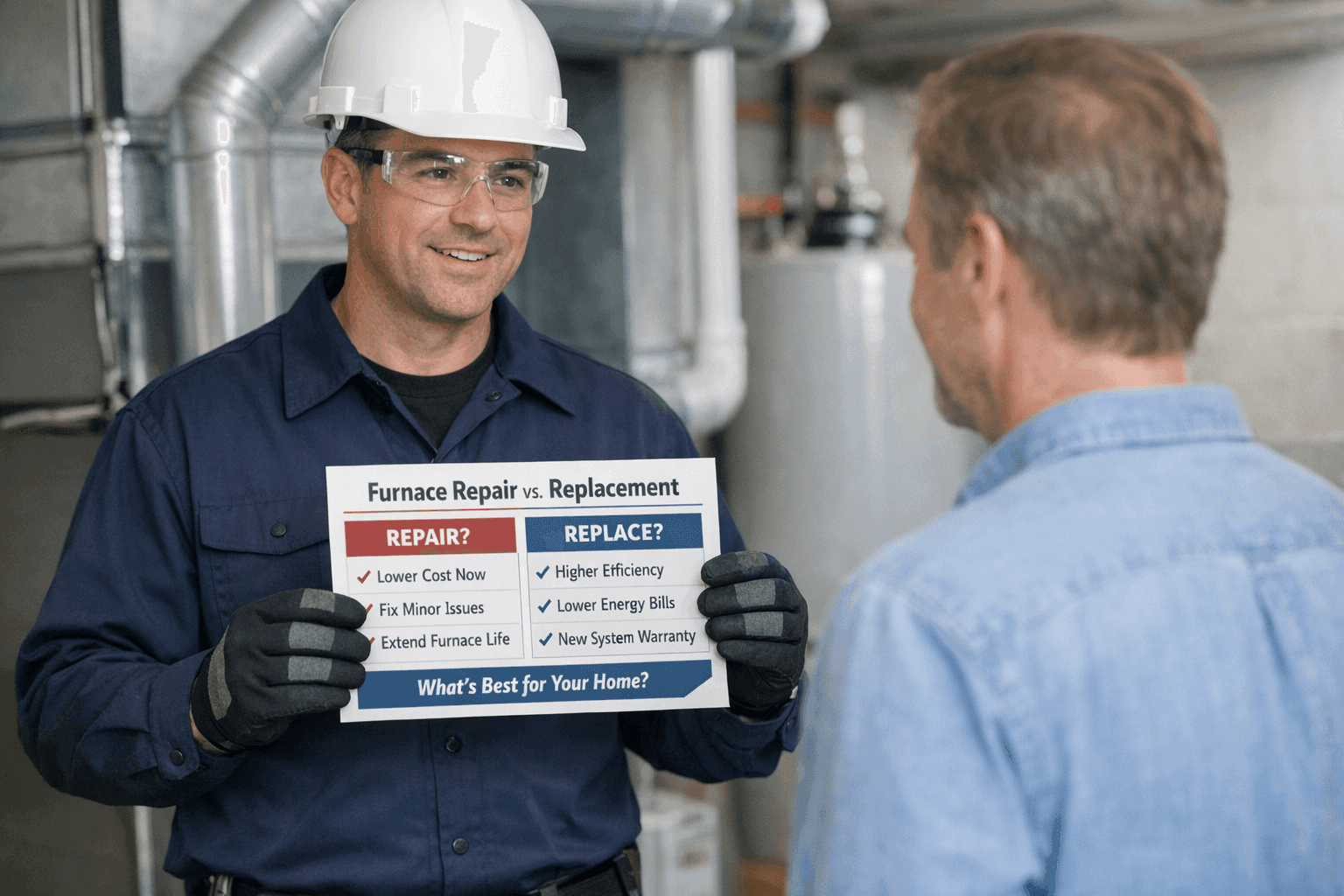
When your furnace sputters out on a cold morning, it’s more than an inconvenience—it’s an urgent problem. At Matlock HVAC, we know that deciding between repairing your old furnace and replacing it with a new one can feel overwhelming. The stakes are high: comfort, safety, and your wallet are all on the line.
Let’s break down the decision in plain language. We’ll help you spot the warning signs, weigh the options, and understand what truly matters for your home or business.
Signs Your Furnace Might Need Replacing 🔥
Not every furnace problem means it’s time for a new unit. But some warning signs are like red flags waving in a winter storm:
- Age: Most furnaces last 15–20 years. If yours is older than your favorite sweatshirt, it may be nearing retirement.
- Frequent repairs: If you’re calling for fixes every season, your furnace is trying to tell you something.
- Uneven heating: Cold spots, drafts, or rooms that never warm up signal trouble.
- Strange noises: Banging, rattling, or humming can mean serious internal wear.
- Rising energy bills: If your bills climb but your comfort doesn’t, your furnace could be losing efficiency.
- Yellow burner flame: A healthy flame is blue. Yellow can indicate incomplete combustion—a safety risk per the National Fire Protection Association (NFPA).
If you notice two or more of these, it’s time to pause and consider your next move.
Pros and Cons: Repair vs. Replacement
It’s tempting to patch things up, especially when money is tight. But sometimes, that’s like taping up a leaky garden hose—it’ll hold for a while, but not forever.
Repairing Your Furnace
Pros:
- Lower upfront cost
- Quick fix for minor issues
- Extends the life of your existing unit
Cons:
- Recurring breakdowns add up
- May not improve energy efficiency
- Older parts can be hard to find
If your system is under 10 years old and repairs are infrequent, furnace repair services can be a smart choice.
Replacing Your Furnace
Pros:
- Modern units are more energy efficient (look for ENERGY STAR® ratings)
- Improved indoor air quality and comfort
- Fewer emergency breakdowns
Cons:
- Higher initial cost
- Installation takes time and planning
If your furnace is aging, inefficient, or repairs are eating into your budget, furnace installation may be a better long-term investment.
Cost and Longevity Factors
Think of your furnace as the heart of your home’s comfort. When it’s strong, everything runs smoothly. But repairs can be like bandages—helpful, but not always a cure.
Key questions to ask:
- How old is the furnace? If it’s over 15 years, replacement often pays off.
- What’s the cost of repair? If repairs exceed half the cost of a new unit, replacement is usually wiser.
- How efficient is it? New models can cut energy use by 20–30% (U.S. Department of Energy).
- Are there rebates or tax credits? Sometimes, upgrading pays you back.
Factor in hidden costs, too: repeated service calls, lost heat, and higher utility bills add up over time.
Quick Safety Checklist
Before you decide, safety comes first. Here’s a lightning-fast check:
- Smell gas? Leave immediately and call emergency services.
- Is the carbon monoxide detector working? Always test before heating season.
- Are vents and filters clear? Blockages can cause overheating and fire risks.
- Is the furnace cycling on/off rapidly? That’s a sign to call a pro.
The International Code Council (ICC) recommends annual inspections—don’t skip them.
DIY vs. Call a Pro
Some furnace issues are like a loose jacket button—easy to fix yourself. Others are more like a broken zipper: best left to skilled hands.
DIY tasks:
- Change filters monthly
- Check thermostat batteries
- Keep vents unblocked
Call a pro for:
- Electrical or gas issues
- Strange noises or smells
- Pilot light or ignition problems
HVAC systems are complex. A misstep can put your safety at risk or void your warranty.
What Pros Do On Arrival
When you schedule a service call, here’s what a qualified technician will typically do:
- Inspect heat exchanger for cracks or corrosion
- Test safety controls and electrical connections
- Check gas pressure and burner operation
- Assess airflow and ductwork
- Recommend next steps based on findings
This thorough checkup ensures nothing is missed.
Prevention & Maintenance
Regular care is like brushing your teeth—simple, but it prevents big problems later.
- Schedule annual tune-ups before heating season
- Clean or replace filters often
- Keep the area around your furnace clear
- Ask about air quality add-ons, like humidifiers or air scrubbers, for healthier breathing
Routine maintenance can extend your furnace’s life and improve efficiency.
When It’s an Emergency 🚨
If your furnace stops in the dead of winter, it’s more than uncomfortable—it can be dangerous. Frozen pipes, unsafe temperatures, and carbon monoxide risks demand fast action.
For those needing Sioux Falls heating services, local support is available for urgent repairs and after-hours emergencies.
Seasonal Considerations
Timing matters. Replacing a furnace in fall or early spring can mean faster scheduling and possible off-season discounts.
- Winter: Emergency repairs are common, but replacement may take longer.
- Spring/Fall: Ideal for upgrades and routine maintenance.
- Summer: Good for planning, but not urgent.
Plan ahead to avoid the rush and keep your home or business comfortable year-round.
Common Mistakes to Avoid
- Delaying repairs until it’s too late
- Ignoring rising energy bills
- Skipping annual maintenance
- Choosing the cheapest bid without checking credentials
A little diligence now saves headaches (and money) later.
Timeline & Disruption
Repair jobs can often be finished within a few hours. Replacements may take a day or two, especially if ducts or thermostats are upgraded.
Ask your technician about expected timelines so you can plan for any downtime.
Materials and Equipment
Modern furnaces use advanced materials for better efficiency and durability. Look for:
- High-efficiency filters
- Programmable thermostats
- Zoned heating options
- Compatible air quality systems (humidifiers, dehumidifiers, air scrubbers)
Upgrading equipment can mean healthier air and lower bills.
Consulting with a Professional
Every home and business is unique. Age, square footage, insulation, and usage all play a part in the decision.
A professional assessment includes:
- Inspecting your current system
- Evaluating heating needs
- Discussing budget and efficiency goals
- Recommending repair or replacement based on facts, not guesswork
If you’re weighing whether to repair your furnace or install a new one, consulting a licensed HVAC technician ensures you make the right choice for today—and tomorrow.
Call Matlock HVAC now — or reach us anytime at 844-484-6545 .