Diagnosing Common AC Problems Before Calling a Pro
Air conditioning isn’t just a luxury on a sweltering day—it’s a lifeline for comfort and safety. But when your AC sputters or blows warm air, frustration rises fast. At Matlock HVAC, we understand the urgency and confusion that comes with a failing cooling system.
Before you pick up the phone, there are a few things you can check yourself. Sometimes the solution is simple. Other times, it’s a sign of a deeper issue that needs a professional’s hand. Let’s walk through the most common AC problems, what you can safely check, and when it’s time to call in the experts.
Most Common AC Issues
Air conditioners can be as moody as a thunderstorm in July. Here are the problems we see most often:
- No cool air: The unit runs, but the air isn’t cold.
- Weak airflow: The breeze feels more like a sigh than a gust.
- Strange noises: Banging, rattling, or whistling sounds.
- Unpleasant odors: Musty or burning smells.
- AC won’t turn on: Silence, even when you crank the thermostat.
- Frequent cycling: The system turns on and off rapidly.
- Water leaks: Puddles forming near the unit.
- High humidity indoors: The air feels sticky despite running the AC.
Each symptom can have several causes. Sometimes it’s as simple as a dirty filter. Other times, it points to something more serious—like a refrigerant leak or electrical issue.
Simple Checks to Try First 🛠️
Before you call for help, try these quick troubleshooting steps. They might save you time and money:
1. Inspect the Thermostat
- Make sure it’s set to “cool” and the temperature is lower than the current room temp.
- Replace batteries if the screen is blank or fading.
- If you have a programmable thermostat, ensure the schedule matches your needs.
2. Check the Air Filter
- A clogged filter is like a blocked nose—it stops airflow and strains the system.
- Change or clean your filter every 1-3 months, or more often if you have pets or allergies.
3. Look at the Circuit Breaker
- Sometimes, a tripped breaker is the culprit.
- Reset it once if it’s off, but don’t keep flipping it if it trips again.
4. Examine the Outdoor Unit
- Clear away leaves, grass, or debris from the condenser.
- Make sure there’s at least two feet of space around the unit for proper airflow.
5. Inspect Vents and Registers
- Make sure all supply and return vents are open and unblocked by furniture or curtains.
- Closed vents can cause pressure problems and reduce efficiency.
If your AC still isn’t performing, it might be time to consider AC repair services from a qualified technician.
Signs You Shouldn’t Ignore
Certain symptoms mean it’s time to stop troubleshooting and call in a pro:
- Burning smells or smoke: Electrical issues can be dangerous.
- Visible ice on coils: Could indicate a refrigerant or airflow problem.
- Unusual sounds: Grinding or screeching can signal motor or belt issues.
- Water leaks: Especially if near electrical components.
- Repeated breaker trips: Points to a serious electrical fault.
Ignoring these signs can lead to bigger problems or safety hazards.
When to Call a Technician
You’ve tried the basics, but your AC still isn’t working. Here’s when to step back and let an expert take over:
- Refrigerant leaks: Only certified technicians can handle refrigerants safely and legally, per EPA guidelines.
- Compressor or motor issues: These components require specialized tools and training.
- Electrical faults: Risk of shock or fire is too high for DIY fixes.
- System won’t start at all: Could be a failed capacitor, relay, or control board.
If you’re in need of Dubuque HVAC services, our team is ready to help—day or night.
Quick Safety Checklist ⚠️
Before you do any hands-on checks:
- Turn off power to the unit at the breaker.
- Wear gloves if inspecting near sharp metal fins or coils.
- Never open sealed electrical panels or attempt refrigerant repairs.
- Keep water away from electrical connections.
When in doubt, wait for a professional. Safety always comes first.
What Pros Do On Arrival
A certified HVAC technician follows a methodical process:
- Visual inspection: Checking wiring, components, and connections.
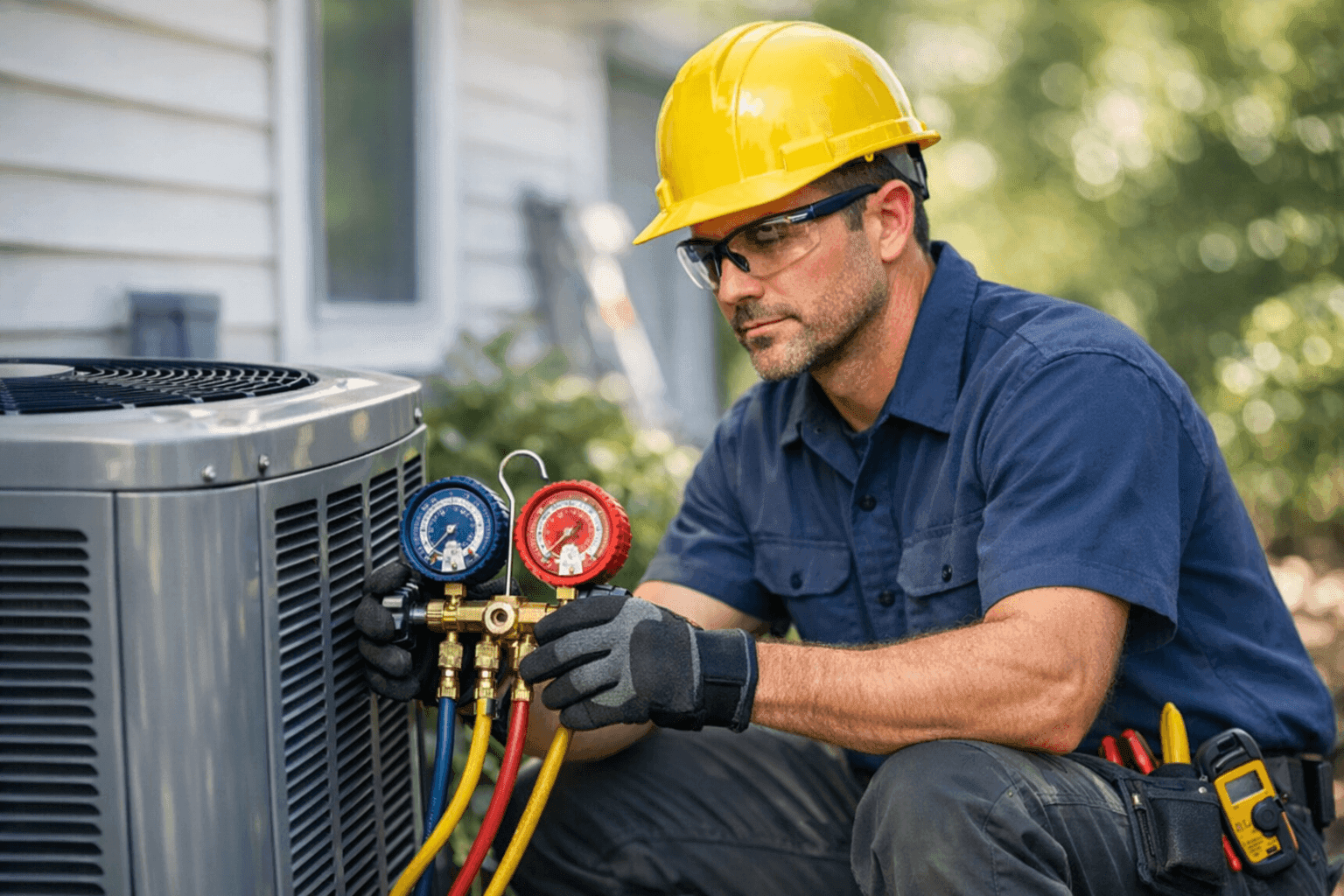
- Testing with meters: Measuring voltage, amperage, and refrigerant pressure.
- Checking airflow: Using anemometers and temperature probes.
- Verifying thermostat operation: Ensuring communication between thermostat and system.
- Looking for code violations: Ensuring compliance with National Electrical Code (NEC) and local safety standards.
This process helps pinpoint the root cause and ensures repairs are safe and effective.
Cost Implications: What to Expect
Worried about costs? Here’s a rough breakdown:
- Filter replacements: Usually low-cost and often DIY.
- Thermostat replacements: Moderate, depending on model and wiring.
- Refrigerant leaks: Can be costly, especially if the compressor is damaged.
- Electrical repairs: Prices vary with the complexity of the issue.
- Major parts (compressor, blower): Higher end of the scale, sometimes prompting discussion about replacement.
Emergency calls, especially after hours, may incur additional charges. Regular maintenance can help prevent many expensive breakdowns.
Preventive AC Maintenance
The best way to avoid sudden AC failures is a routine maintenance plan. Here’s what you can do:
- Change filters regularly.
- Clean vents and clear debris from the outdoor unit.
- Schedule annual tune-ups with a pro.
- Keep an eye on thermostat settings and battery life.
For more structured AC maintenance tips, check out our service guide.
Common Mistakes Homeowners Make
It’s easy to overlook the small stuff. Watch out for these pitfalls:
- Ignoring filter changes: It’s the #1 cause of poor performance.
- Blocking vents: Reduces airflow and stresses the system.
- Skipping annual maintenance: Small issues can grow into big repairs.
- DIY refrigerant top-offs: Illegal and dangerous without proper certification.
A little attention goes a long way toward a cool, comfortable home.
Timeline & Disruption: What to Expect
Most simple AC repairs can be diagnosed within an hour. Parts availability and the nature of the problem determine repair time. For major fixes—like compressor replacement—expect a few hours or more. Technicians aim to minimize disruption and keep your space tidy.
When It’s an Emergency 🆘
Some AC problems just can’t wait:
- No cooling during a heatwave: Health risk for children, elderly, or those with medical needs.
- Electrical burning smells: Immediate fire hazard.
- Flooding or water near the unit: Can lead to mold or electrical damage.
If you’re facing a true emergency, reach out right away. Matlock HVAC offers 24-hour service for critical situations.
Seasonal Considerations
AC problems often pop up during the first hot spell after months of dormancy. Dust, debris, and critters may have settled in over winter. Spring is the perfect time for a check-up. Regular cleaning and a quick test run before peak season can save headaches later.
Materials & Equipment: What You’ll Need
For basic troubleshooting, keep these on hand:
- Replacement air filters (the correct size for your system)
- Fresh thermostat batteries
- Flashlight for inspecting vents and units
- Screwdriver (if you need to remove a vent cover)
- Gloves for protection
Leave specialized tools—like refrigerant gauges and electrical testers—to the professionals.
Indoor Air Quality and Your AC
A struggling AC can worsen indoor air quality. Dirty filters, blocked ducts, or excess humidity all play a part. Consider adding humidifiers, dehumidifiers, or air scrubbers to your system for healthier breathing. If you’re searching for “Humidifiers near you,” Matlock HVAC can help integrate these solutions into your setup.
FAQ: Your AC Troubleshooting Questions
How often should I change my AC filter?
Every 1–3 months, depending on usage and household factors.
Why does my AC freeze up?
Usually due to restricted airflow (dirty filter) or low refrigerant.
Is it safe to reset the breaker myself?
Once, yes. But repeated trips mean you should call a professional.
Can I use a window fan if the central AC is out?
Yes, for short-term relief. But don’t ignore the underlying problem.
Preparing for Service
Before the technician arrives:
- Clear the area around your indoor and outdoor units.
- Write down any error codes or symptoms.
- List what troubleshooting steps you’ve tried.
This helps your technician diagnose the problem faster and more accurately.
The Limits of DIY
Remember: Some things are meant for the pros. Refrigerant, high-voltage electricity, and complex electronics are best left untouched. Following Occupational Safety and Health Administration (OSHA) guidelines and EPA regulations isn’t just smart—it’s the law.
Stay cool, stay safe, and don’t let AC troubles ruin your day. If you need help, Call Matlock HVAC now — or reach us anytime at 844-484-6545 .